When discussing Armenia’s real estate sector, attention often centres on square metres, prices, and construction volumes. Yet over time, the value of a project is also measured by its architecture, the quality of the environment it creates, its sustainability, and the value it can preserve for decades to come.
This raises a broader question: can contemporary projects created in Armenia become part of the international professional dialogue while retaining their local identity? Amanoo’s experience offers an opportunity to explore this question through the example of a specific project.
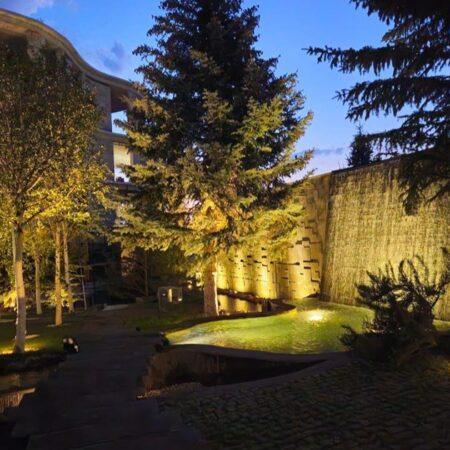
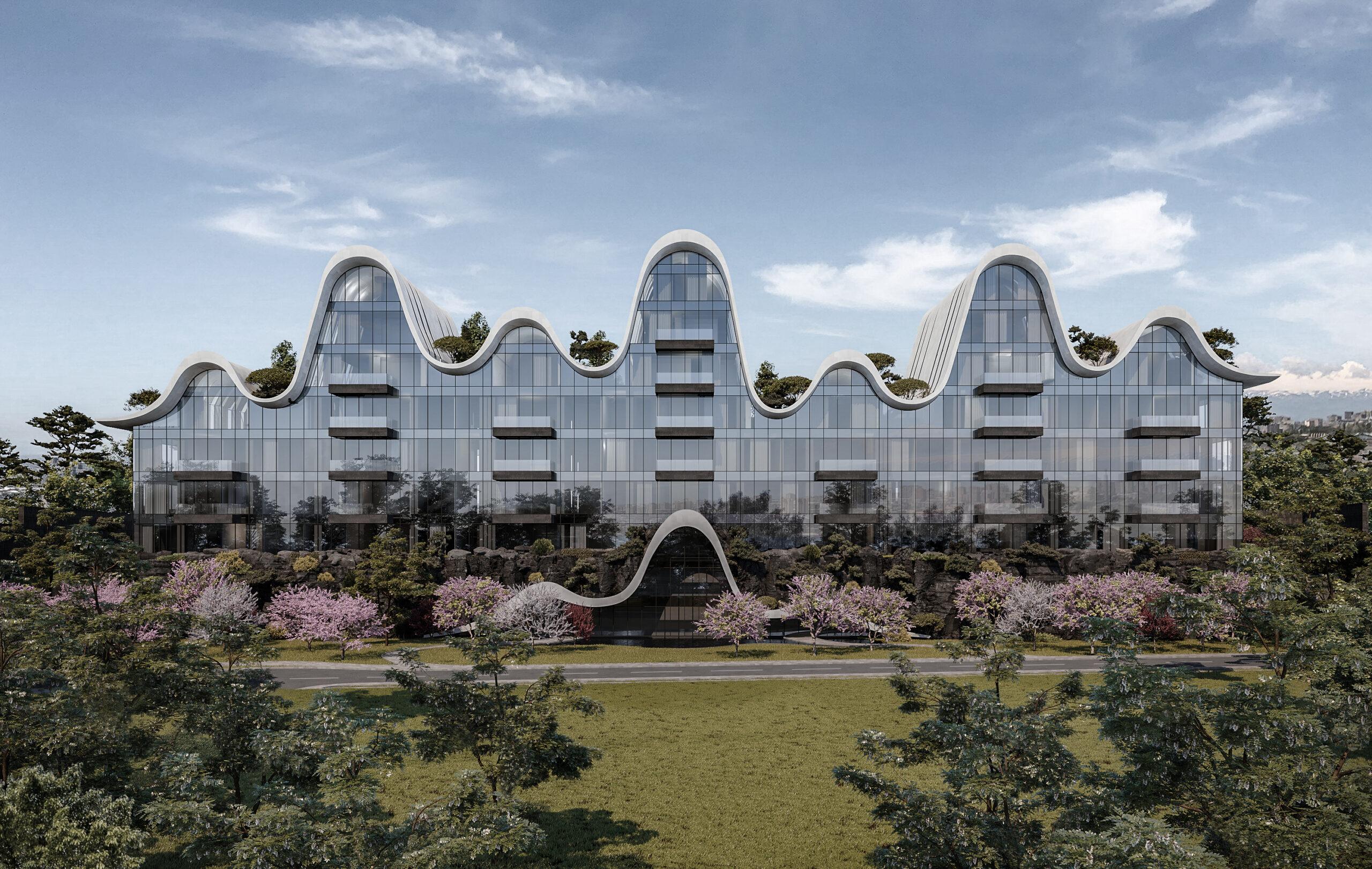
The district is shaped around the idea of an integrated environment, where architecture, landscape, pedestrian paths, water systems, and green spaces are considered as one interconnected whole. This approach begins with an understanding of the site. For Amanoo, nature becomes a source for the organisation of form and space, while the biomimetic approach finds its expression in the architectural language. Here, the study of natural forms and structures is transformed into architectural solutions while maintaining a connection to the landscape and the vision of the district. The architectural concept also becomes complete through details that are not always immediately visible at first glance.
Amanoo’s first project, Ivy, has been featured on German company Schüco’s international project platform and included in its international annual calendar. On September 1 this year, Ivy and Sarin, currently under construction, were also featured on the international architecture platform e-architect.
The publications present the architectural concept of the projects, their biomimetic approach, and the vision for the development of the entire 11-hectare site. This presence places the Armenian project within a broader professional context, allowing contemporary Armenian architecture to be considered alongside international projects within a shared professional language and framework of standards.